Back to Resources
Case study
Signal in the Sand: How SAR Supports Search and Rescue When Every Hour Counts
July 28, 2025
.png)
When lives are at stake, visibility can make the difference between rescue and tragedy. But in many of the world’s harshest environments, visibility is the first thing to vanish. From desert sandstorms to dense mountain fog, responders are often forced to operate blind—delaying search efforts just when speed matters most. That’s where Synthetic Aperture Radar (SAR) changes the game.
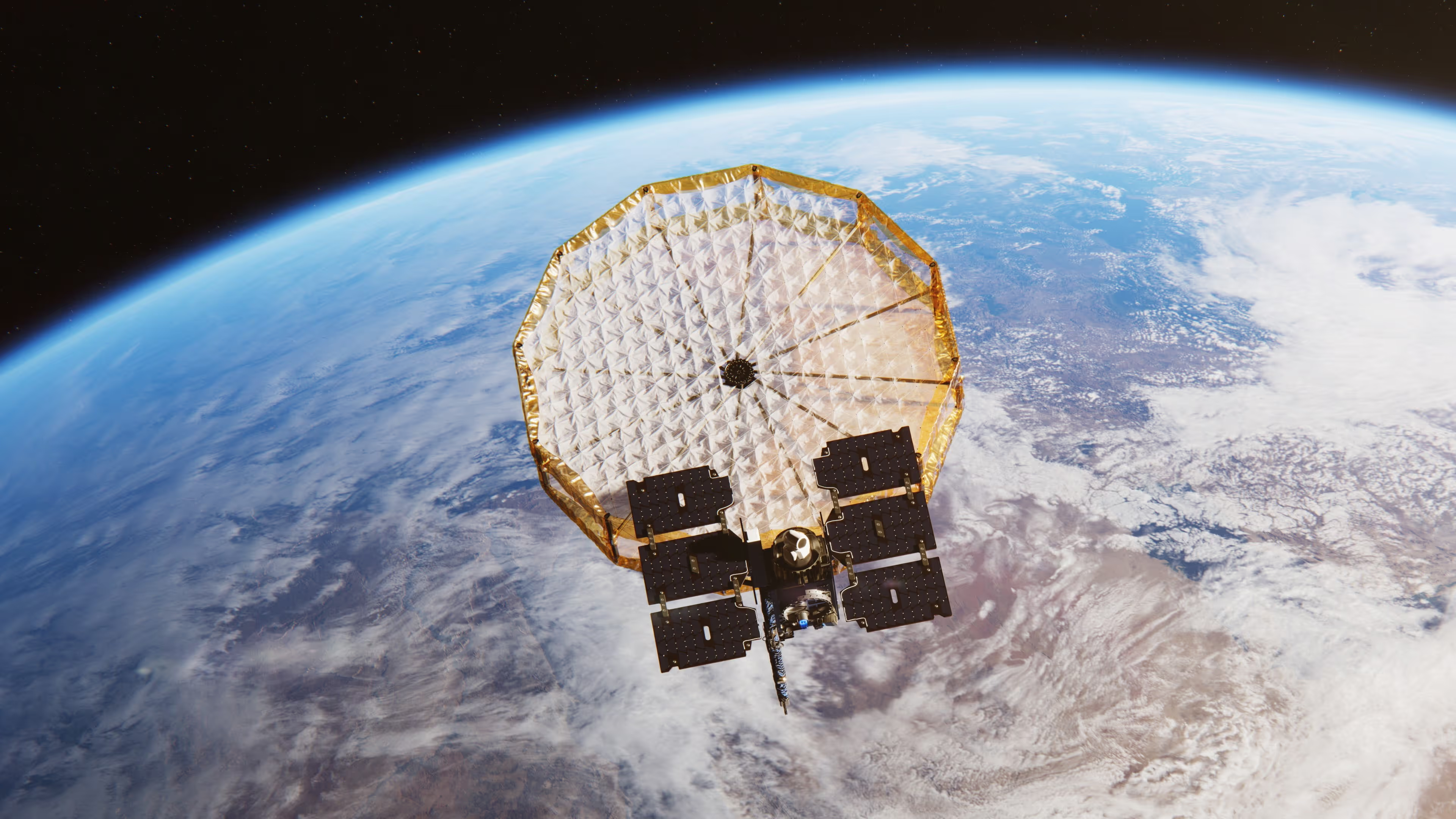
Capella Space’s high-resolution radar satellites deliver persistent, all-weather imagery through dust, haze, and total darkness. With taskable access and advanced imaging capabilities like Colorized Sub-aperture Imaging (CSI), Capella enables faster detection of stranded vehicles, shelters, and other signs of life in remote or austere environments.
A Tragic Case Study: The 2024 Varzaqan Helicopter Crash
On May 19, 2024, a helicopter carrying Iranian President Ebrahim Raisi and several senior officials crashed in the rugged mountains near Varzaqan, East Azerbaijan Province. The crash occurred in poor weather, with heavy fog and rough terrain hindering traditional search efforts. Hours passed as rescuers struggled to locate the downed aircraft in an area with little infrastructure and minimal visibility.

.png)
Capella’s SAR satellites were able to capture a nighttime image of the crash site shortly after the initial report. Capella's CSI now reveals the aircraft clearly as a man-made object highlighted in blue, standing out from the mountainous backdrop. This example illustrates how radar imaging can support faster confirmation and geolocation of crash sites—critical when every minute counts.
.png)
Search and Rescue in Harsh Environments: Common Challenges
Modern search and rescue operations face increasingly complex conditions, especially in desert and mountainous regions:
- Limited Visibility in Sandstorms and Fog: Optical satellites and aerial patrols struggle to operate when dust, haze, or cloud cover obscure the landscape.
- Unmapped Terrain with Minimal Markers: Off-road areas offer no infrastructure or consistent landmarks, making it difficult to visually detect stranded vehicles or camps.
- Delayed Aerial Response: Bad weather often grounds aircraft, further slowing efforts to locate and extract individuals.
As off-road excursions grow in popularity—and vehicle-related incidents rise in remote areas—SAR offers a powerful tool to enhance public safety and emergency response.
Putting Life-Saving Intelligence in Your Hands
Capella SAR gives rescue teams the tools they need to make faster, more informed decisions. Whether it’s locating a lost off-roader in a desert canyon or identifying an aircraft in the aftermath of a crash, Capella’s SAR capabilities turn blind searches into targeted missions.
- High-quality imaging data, day or night
- Secure, autonomous tasking and delivery
- Compatible with third-party analytics platforms and AI detection tools
In environments where seconds matter and signals vanish, SAR sees through the noise—and brings clarity when it’s needed most.
Curious Which Of Our Analytics Partners
Can Support Your Mission?
Contact our team to explore the possibilities. Our experts can help
you determine the optimal solutions for your unique needs.

Keywords


Stay Informed. Stay Ready.
Get briefings on new capabilities, technology improvements, and upcoming events.


.avif)