August 31, 2023

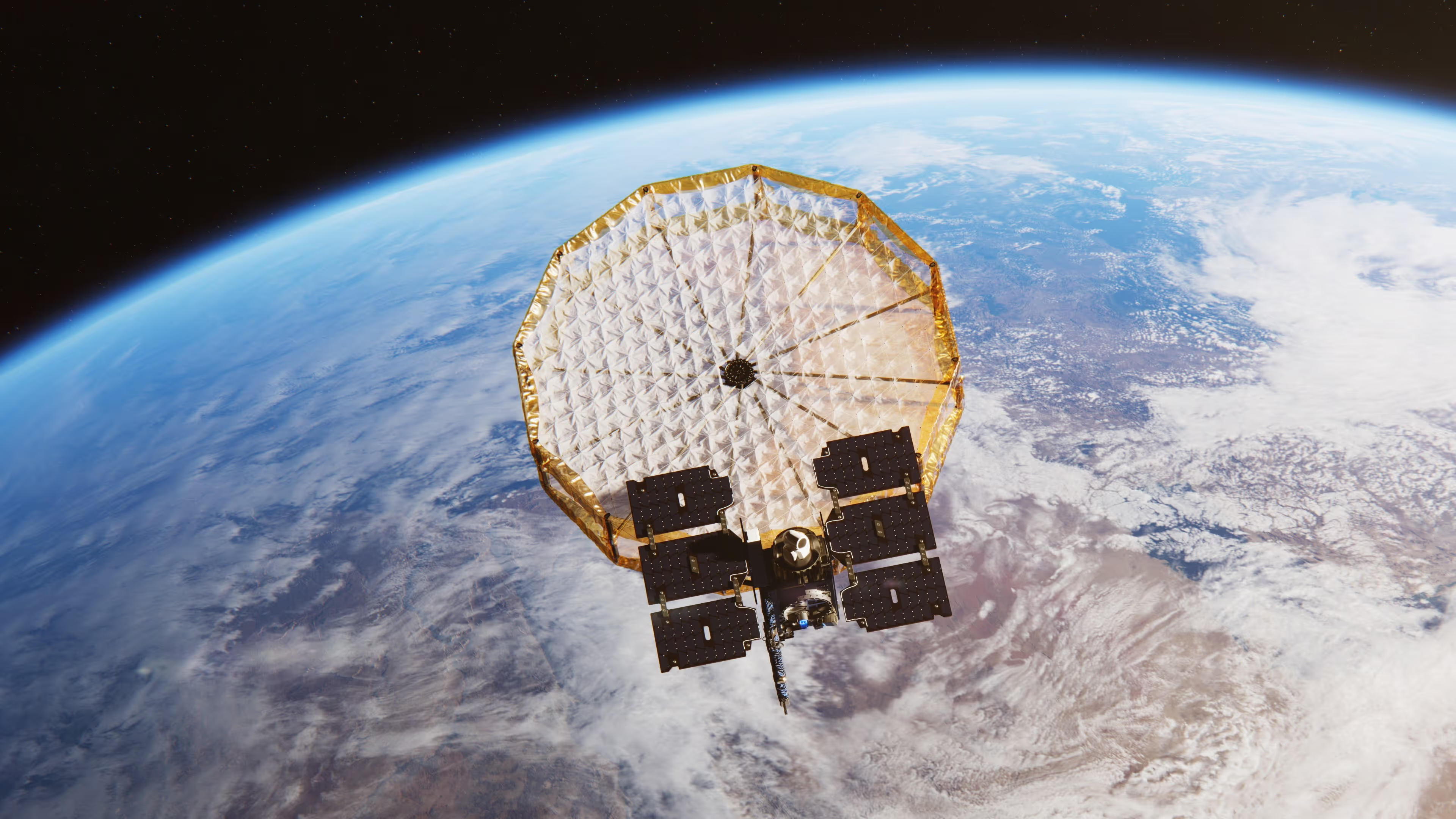
Our first Acadia satellite (Acadia-1) launched from the Rocket Lab Launch Complex 1 in New Zealand at 4:45 pm Pacific Time on Wednesday, August 23. This mission, “We Love the Nightlife”, is the initial launch of Capella’s third-generation satellites, enhancing Capella’s existing constellation with even higher power, increased bandwidth, improved payload downlink and reduced latency. Just a week later and after a flawless commissioning, we’re thrilled to share Acadia’s first light imagery.
Today we share imagery highlighting rollercoasters from around the world. SAR sensing works by emitting a radar signal to Earth and measuring how long it takes for those signals to return to the satellite. Smooth surfaces deliver weaker returns making them appear darker in the imagery. Rougher surfaces or metallic objects produce stronger returns, making them appear brighter in the imagery. Here you see rollercoasters and other infrastructure brightly lit up because of the signals bouncing off the metal surfaces of the rollercoasters.


Acadia was built to deliver higher quality imagery with better reactivity and lower latency for our customers. The higher bandwidth of the Acadia radar provides higher resolution SAR imagery than the Whitney class satellites. To maintain Capella’s industry-leading image quality, we also increased the power transmitted by the radar, and to maintain Capella’s existing orbital imaging time of 10 minutes, we added larger batteries and bigger solar array panels. Acadia-1 also has a significantly improved propulsion system that provides enhanced orbit keeping and collision avoidance. Despite the new hardware components and updated commissioning procedures, commissioning of the Acadia-1 satellite was flawless and was finished faster than any previous Capella satellite. This accomplishment speaks to the standard that we set for ourselves and the skill and dedication of the team at Capella.

Capella’s success stems from a philosophy for continued growth and innovation. With the Acadia generation of satellites, we offer the latest cutting-edge satellite and SAR technology to our customers. But our work does not stop here. Future Acadia satellites will be able to add even more advanced Earth-imaging capabilities to the Capella constellation. The bus has additional volume that has been designed to accommodate an optical communications terminal that we will fly in upcoming Acadia satellites. The bus has also been designed to accommodate a gimballed downlink antenna for in–theatre downlink. Acadia-1 is just the start to an innovative new generation of SAR satellites that will continually enhance Capella’s existing capabilities.
Imagery from Acadia will become more broadly available to customers over the coming days.

Curious Which Of Our Analytics Partners
Can Support Your Mission?
Contact our team to explore the possibilities. Our experts can help
you determine the optimal solutions for your unique needs.

Keywords

Stay Informed. Stay Ready.
Get briefings on new capabilities, technology improvements, and upcoming events.


.avif)